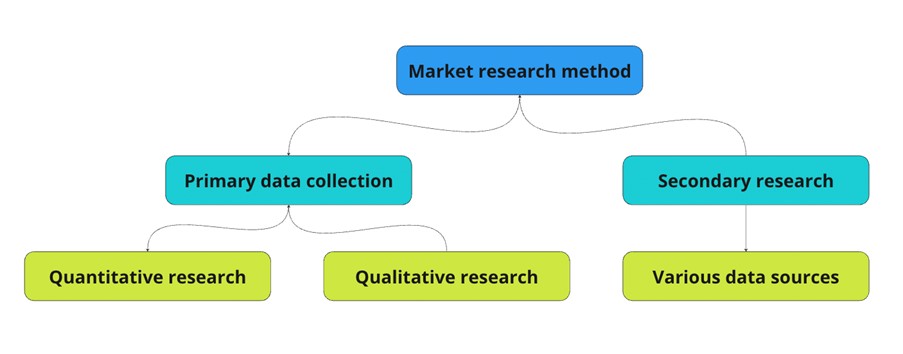
Information, industry experts, and secondary data may not be sufficient to define the research problem. Sometimes qualitative research must be undertaken to gain a qualitative understanding of the problem and its underlying factors. Qualitative research is unstructured, exploratory in nature, based on small samples, and may utilize popular qualitative techniques such as focus groups, in-depth interviews, and usability tests, etc.
Potential targets for qualitative research include company heads and employees, competing companies, users, public sectors, researchers, associations in the field, etc.
Focus group
The focus group method is a qualitative research technique used to gather insights and opinions from a small, diverse group of individuals about a specific topic, product, service, or concept. It involves guided discussions led by a trained moderator in a structured and interactive environment.
In the market research area, focus group methods can contribute to Exploratory Research, Concept Testing, Customer Behavior and Decision-Making, Customer Satisfaction and Feedback, etc.
To conduct a focus group, researchers typically follow these steps:
- Define the Objective: Clearly outline the research objectives and questions you want to address through the focus group discussions.
- Recruit Participants: Select a diverse group of participants who represent your target audience. Participants should have relevant knowledge and experiences related to the topic.
- Moderation: A skilled moderator leads the discussion, ensures that all participants have an opportunity to speak, and guides the conversation based on a predefined discussion guide.
- Data Collection: Researchers record the discussions, often with audio or video equipment, and take notes on participants' comments, reactions, and interactions.
- Data Analysis: Transcribe and analyze the discussion data to identify patterns, themes, and insights relevant to the research objectives.
- Report and Findings: Summarize the key findings and insights from the focus group discussions in a report that can inform marketing strategies, product development, and decision-making.
Template for Focus Group from Hubspot: View Template
In-depth Interview
The interview method is a qualitative research technique that involves direct one-on-one interactions between a researcher and a participant to gather in-depth information, insights, and opinions. Interviews are conducted in a conversational manner, allowing the researcher to probe and explore the participant's thoughts, experiences, and perspectives on a specific topic.
In the market research area, the interview method can contribute to In-depth Consumer Insights, New Product Development, User Experience and Usability Testing, Competitor Analysis, Trend and Market Analysis, etc.
To conduct interviews for market research, follow these steps:
Define Objectives: Clearly outline the research objectives and the specific topics you want to explore through the interviews.
Recruit Participants: Select a diverse group of participants who represent your target audience and have relevant insights to share.
Preparation: Develop a list of open-ended questions and discussion topics that will guide the interview. Ensure the questions encourage participants to share detailed responses.
Conduct Interviews: Conduct the interviews either in person, over the phone, or via video conferencing. Create a comfortable and relaxed environment that encourages open and honest communication.
Data Collection: Record the interviews, with the participant's consent, and take detailed notes during the conversations.
Data Analysis: Transcribe and analyze the interview data to identify patterns, themes, and insights relevant to the research objectives.
Report and Findings: Summarize the key findings and insights from the interviews in a report that can inform marketing strategies, product development, and decision-making.
More qualitative research methods: Ethnography, Diary studies, Usability tests, etc.
Learn more about qualitative research:
Additional resources for qualitative research:
- The Moderator's Survival Guide: Handling Common, Tricky, and Sticky Situations in User Research by Donna Tedesco and Fiona Tranquada. Source: Amazon
- SAGE Research Methods: Offers articles, videos, and other resources on research methods, including qualitative interviews. Website: SAGE Research Methods
- Qualitative Research Consultants Association (QRCA): Offers resources, webinars, and articles related to qualitative research methods. Website: QRCA
- Research Methods Knowledge Base: Provides a comprehensive overview of various research methods. Website: Research Methods Knowledge Base